
Are you in a dental emergency? Call us: (301) 720-1165.
Dental emergencies can always prove to be disturbing situations, and they always seem to come when you least expect them. Whether it is the pain of a toothache, the loss of a tooth, or the breaking of a filling, it is crucial that you take the right steps by staying calm and acting appropriately before you see your dentist.
However, in a moment of panic, it is easy to overlook an important task that could significantly affect the outcome of a visit to the dentist. There are many things an individual can do, from alleviating pain to saving a tooth that may have fallen out, to ensure they are well prepared for a visit with a dentist. With this guide, you will learn the steps to take in a dental emergency.
Stay Calm and Assess the Situation
The first thing to do when you are having a dental emergency is to take deep breaths and stay calm. Panicking will not help and will only worsen the situation. Ensure that you take a few deep breaths and concentrate on the nature of your emergency. Are you having any form of pain? Is there any blood involved? Are you missing a tooth or a dental appliance? The answers to these questions will tell you how urgent your visit is.
Identifying Common Dental Emergencies
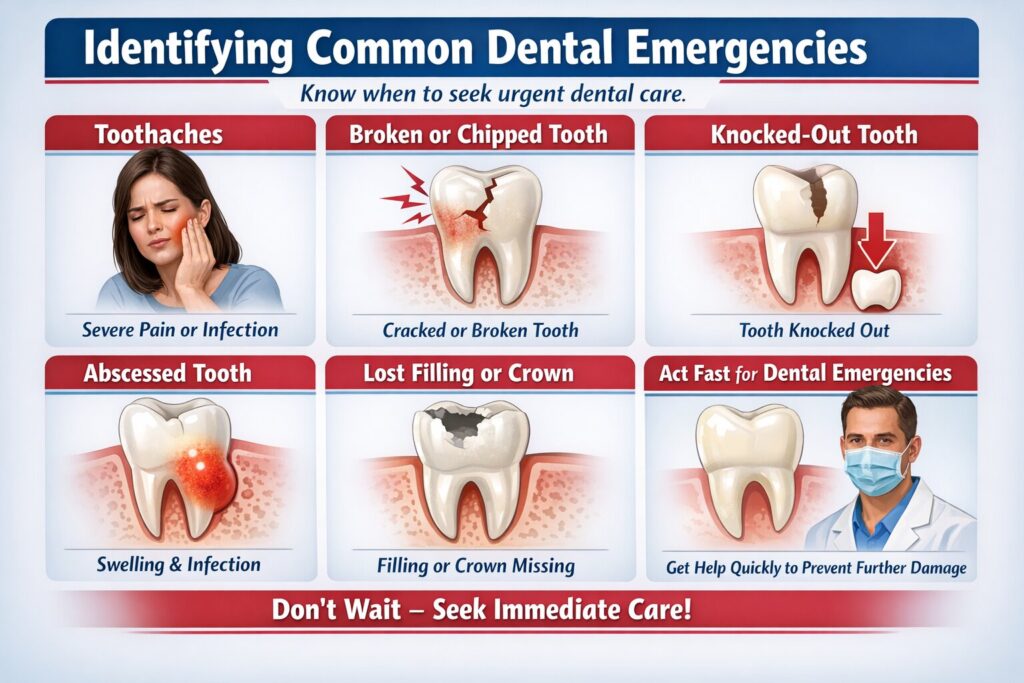
Knowing how to recognize a dental emergency can make a huge difference. There are some dental emergencies that you can wait to address until you can schedule an appointment, while others, if you do not get immediate care, are more likely to cause damage and pain. Here are some of the dental emergencies that you might feel:
- Toothaches: Pain in a tooth can be serious and may indicate an infection or a cavity that needs to be addressed immediately.
- Broken or Chipped Teeth: A broken or cracked tooth often causes sharp pain. However, if the condition is not treated, an infection could result.
- Knocked-Out Tooth: If it has been completely knocked out, it’s crucial to act quickly, as it may be saved with a dentist’s help.
- Abscessed Tooth: An abscess, a collection of pus caused by infection, may cause swelling, pain, and fever, and it needs urgent care to prevent the spread of infection.
- Loose or Lost Fillings: If a tooth loses a filling or a crown, it becomes vulnerable to infection, which can cause pain and sensitivity. This needs to be treated to avoid further complications. By identifying common emergency situations, you can respond quickly and obtain assistance.
What to Do Before You See the Emergency Dentist in Waldorf
Once you’ve taken that instant to collect yourself, here are the steps that you need to take to handle the situation before you seek dental attention from your dentist:
1. Stop Any Bleeding
If, however, you are dealing with bleeding from a cut on the gum or lip, apply pressure to the affected area with a clean cloth or gauze. You should wait for 15 to 20 minutes to see if it stops. However, if it doesn’t, it’s then time to phone your emergency dentist in Waldorf.
2. Preserve Any Lost Teeth or Dental Work
If a tooth has been knocked out, you should act as quickly as possible to increase the chances of reimplanting it. A tooth should be held by the crown, not by the roots. Also, you should wash the tooth in water. However, you should not brush or soap the tooth. If you can, you should place the tooth back where it belongs. In case you are unable to do this, you should store the tooth in a cup of milk. In addition, you should bring the tooth with you to your emergency dental visit.
3. Manage Pain
Pain is one of the most common symptoms in dental emergencies. Pain can be eased with over-the-counter painkillers like ibuprofen or acetaminophen. However, aspirin should be avoided as it can burn the tissues. Pain can also be eased by using ice packs. The ice should be wrapped in a cloth to avoid skin damage.
4. Control Swelling
In cases of injury with swelling, such as a tooth abscess or trauma, applying a cold compress to the jaw or cheek can reduce swelling. Remember to place a cloth over the ice for your protection. Applying the ice for 15-minute increments will offer the best results.
5. Avoid Using the Affected Area
If you have damaged a tooth or filling, it is recommended that you avoid using the damaged area until you reach the emergency dentist. This way, you will be able to avoid any additional discomfort and damage. For instance, if you have broken a tooth, you should avoid using that area until you see a dentist and get the necessary treatment.
6. Contact Your Emergency Dentist Right Away
It’s important for your dental health to contact a dentist as soon as possible. Try to call the dental office before arriving to discuss your situation.
Source: Cosmetic Dentistry Grants Program
Getting The Help You Need
While a dental emergency is a critical and frightening time, knowing exactly what to do prior to going to an emergency dentist in Waldorf could really improve the outcome. From controlling bleeding to saving a lost tooth, remaining calm and completing simple steps will significantly improve your dental health. We are here to help you with any dental emergency, providing immediate care to ease your discomfort.
From a knocked-out tooth to a painful cavity or broken dental work, we can give you the care that you need. If you have a dental emergency, don’t hesitate to call TriDental immediately so we can take care of the rest.
Questions People Ask About Dental Emergency
What should I do if I lose a tooth during a dental emergency?
If a tooth is knocked out, rinse it gently with water, avoiding scrubbing. If possible, place it back in the socket. If not, keep it moist in milk or saliva and seek immediate help from your emergency dentist.
How can I manage tooth pain before I get to the dentist?
Take over-the-counter pain relievers like ibuprofen or acetaminophen to manage tooth pain. Apply a cold compress to reduce swelling and numb the affected area until you can see your emergency dentist.
Can I treat a dental abscess at home?
Although an abscess requires professional treatment, you can manage the discomfort by rinsing your mouth with warm saltwater. A cold compress can also help reduce swelling while you wait for your emergency dentist’s care.
How do I know if my dental issue requires immediate attention?
If you feel severe pain, uncontrolled bleeding, or a knocked-out tooth, it’s crucial to visit an emergency dentist as soon as possible. Delaying treatment may lead to more serious complications.
Should I use aspirin on a painful tooth?
Do not place aspirin directly on the tooth or gums, as it can burn tissue. Instead, use over-the-counter pain relievers like ibuprofen or acetaminophen, which are safer for managing dental pain.
What if I can’t get to the dentist right away?
If you can’t reach TriDental immediately, apply a cold compress to reduce swelling and take pain relievers for comfort. Call us for guidance on next steps, and we’ll help you manage the situation.