
Are you in a dental emergency? Call us: (301) 720-1165.
A knocked-out tooth can be traumatic and especially surprising. No matter how you lose a tooth, whether it be from an accident, sports injury, or falling, it is important to know the proper steps to follow so that your tooth can be saved. The first few minutes of loss of a tooth are of great importance for a successful outcome. So, what do you do first? Staying calm and knowing the appropriate response will truly help save your tooth.
In this blog, we’ll break down the right steps for Waldorf residents who lose a tooth. What you do right away will not only affect the tooth but also the immediate actions you take before seeing the dentist. Let’s dive in so you can respond immediately and calmly.
Immediate Steps for Saving a Knocked-Out Tooth
When a tooth is knocked out, the most important action is to keep the tooth viable until professional dental help can be given. The sooner action is taken, the greater the chances are that the tooth can be saved. Here’s what to do:
1. Recover the Tooth Immediately: If you lose a tooth, find it as soon as you possibly can. Avoid touching the root as this can potentially harm cells that help the tooth reattach to the socket. It’s important to handle the tooth from the crown (what’s normally seen).
2. Rinse The Tooth, But Do Not Scrub: Pick up the tooth and rinse any dirt or debris from the tooth with clean water. Don’t brush off the tooth, and definitely don’t scrape anything from the root, as this will strip the root cells.
3. Preserve Moisture in the Tooth: The third step in saving your knocked-out tooth is to keep the tooth moist. If possible, gently place the tooth back into its socket and bite down on clean gauze or cloth to hold it in place. In case reinserting it isn’t an option, store the tooth in a glass of milk. Alternatively, you may use saline solution, or as a last resort, plain water.
4. Contact an Emergency Dentist in Waldorf: Now that the tooth is safe and moist, you’ll need to contact an emergency dentist in Waldorf. A tooth has to be seen by a dentist within the first 30 minutes for optimal saving potential. At TriDental, we see patients as soon as possible to increase the likelihood of saving the tooth.
5. Control the Bleeding: In order to be able to perform the remaining actions, it’s best to stop the bleeding by applying pressure to the wound with clean gauze or a clean cloth.
When to See a Dentist?
A knocked-out tooth requires immediate professional attention; the window to reattach it is incredibly short. A visit to an emergency dentist in Waldorf can dramatically improve your chances of successfully saving your tooth, as long as it is kept moist and handled with care by a dental professional.
It’s also very important to see your dentist again after the emergency treatment. Your dentist may recommend follow-up procedures to ensure your tooth is in good condition, such as a root canal.
What Will Happen at the Dentist’s?
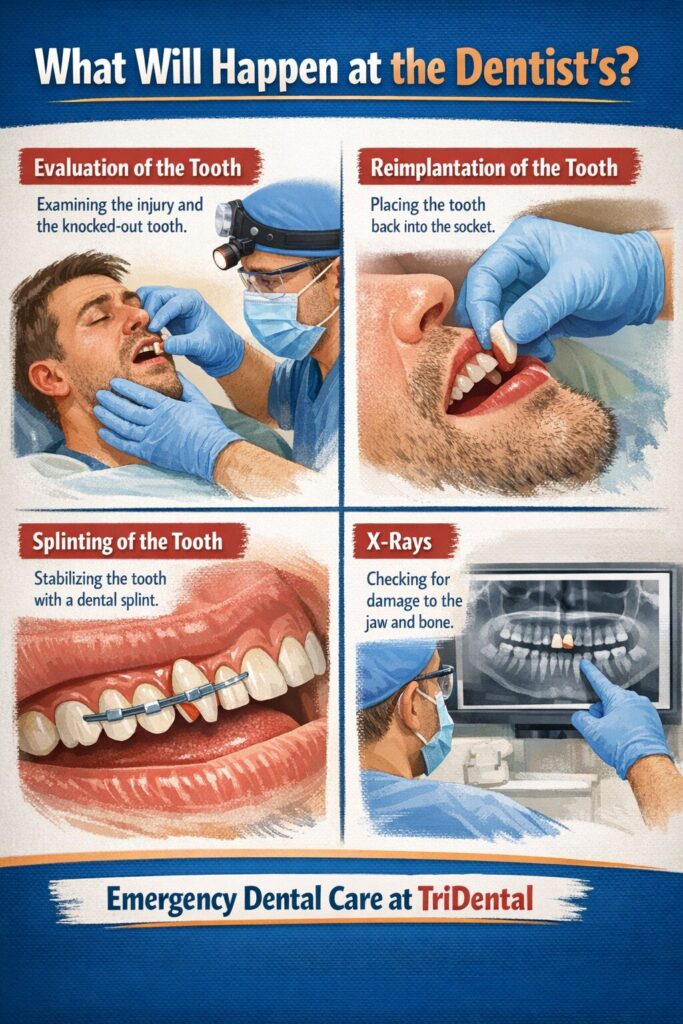
When you arrive at TriDental with a knocked-out tooth, our emergency dentist will quickly assess your situation and take steps that maximize your tooth’s chances for recovery. Each step is vital:
- Evaluation of the Tooth: Your emergency dentist will thoroughly examine the tooth and the injured area of your gums and mouth to assess the damage and determine the optimal method for reattaching it.
- Reimplantation of the Tooth: Your dentist will immediately attempt to gently place the tooth back into the socket where it was knocked out-a process called tooth reimplantation. The faster this is done, the more likely it is to succeed.
- Splinting of the Tooth: If necessary, your dentist will gently place a splint on your tooth to help it remain stable and adhere to the surrounding bone while it heals.
- X-Rays: X-rays will be taken to make sure that there is no further damage to your jawbone and tooth that cannot otherwise be determined by eye.
The sooner these procedures are performed, the greater the chance that your tooth will heal properly back into the socket.
Aftercare for the Re-Implanted Tooth
Properly caring for the re-implanted tooth is an essential part of the process. The first few days after reimplantation require extra care to help your tooth heal, and proper aftercare is necessary to avoid complications and ensure a successful outcome.
- Careful Instructions from the Dentist: Your dentist will outline specific steps to follow when caring for your newly reimplanted tooth. Adherence to these directions will be key to its successful reintegration.
- Avoid Chewing with Re-Implanted Tooth: To prevent disruption, you will likely need to avoid eating or chewing on the side of the mouth with the reimplanted tooth until it has reattached.
- Modified Diet: You should also plan to eat and drink only soft foods during the initial healing period.
- Gentle Cleaning: maintain oral hygiene by cleaning your teeth meticulously. However, you’ll need to be extremely gentle on and around the re-implanted tooth, taking great care to avoid moving it.
Source: Dental House MI
Begin Your Journey to a Beautiful & Healthy Smile Today
At TriDental Waldorf, we know emergencies can happen at any time, whether due to the loss of a tooth or another form of emergency treatment you may need. We have our trained dental professionals available, along with all the latest dental equipment and technology to aid you. Located to service Waldorf and the surrounding communities.
Are you in need of an immediate dental emergency service appointment? Call us today and arrange an appointment at TriDental at the earliest opportunity. Let our team provide the care you need to save your smile.
Questions People Ask About Dental Emergency
Can a knocked-out tooth be saved?
Yes, if you act quickly. The chances of saving a knocked-out tooth are highest if you see an emergency dentist within 30 minutes of the incident. Keeping the tooth moist and re-inserting it into its socket is key to a successful outcome.
What should I do if I can’t find my tooth?
If you can’t locate the tooth, try to stay calm. In cases where it might have been swallowed, it’s important to seek medical attention right away. When the tooth cannot be recovered, a dentist may suggest replacement options such as a dental implant.
How long can a knocked-out tooth be kept in milk?
You should aim to keep the tooth in milk or saline solution for no more than 1-2 hours. The longer it’s out of the mouth, the lower the chances of successful reattachment.
Will the reimplanted tooth ever be the same?
After successful reimplantation, the tooth may need to be stabilized with a splint, and you might need additional treatments, such as a root canal, to maintain the tooth’s health. With proper care, it can function like a natural tooth.
Is it painful to reimplant a knocked-out tooth?
Reimplantation is typically performed under local anesthesia, so you shouldn’t feel pain during the procedure. Some discomfort or sensitivity may occur afterward, but this usually subsides within a few days.
Can children’s teeth be replanted after being knocked out?
Yes, children’s teeth can sometimes be reimplanted if they’re lost due to injury. However, because children’s teeth are still developing, the treatment might vary depending on the tooth’s condition and the child’s age.