Teeth grinding is often associated with children or younger adults, but many people are surprised when the habit suddenly appears later in life. If you have recently started waking up with jaw pain, headaches, or sensitive teeth, you may be experiencing bruxism — the medical term for teeth grinding. Many patients visiting a Waldorf Dentist office ask why this issue begins seemingly out of nowhere.
At TriDental Waldorf in Waldorf, MD 20601, patients frequently report new symptoms connected to stress, sleep issues, or changes in overall health. Understanding the causes of adult-onset teeth grinding can help protect your teeth before long-term damage develops. This guide explains why grinding may begin later in life, the warning signs to watch for, and what treatment options may help.
Why Teeth Grinding Can Start Later in Life
Teeth grinding does not always begin in childhood. In fact, adults in their 30s, 40s, 50s, and beyond may suddenly develop the condition due to lifestyle, medical, or emotional changes.
Bruxism can occur while awake or during sleep. Some people clench their jaw during stressful situations, while others grind unconsciously overnight.
Several factors can contribute to late-onset teeth grinding, including:
- Increased stress or anxiety
- Sleep disorders
- Changes in medication
- Dental misalignment
- Aging-related oral changes
- Lifestyle habits like caffeine or alcohol use
Because symptoms often develop gradually, many people do not realize they are grinding until noticeable damage appears.
Common Signs of Teeth Grinding
A Dentist Waldorf patients trust will often identify grinding during a routine dental exam. However, recognizing the symptoms early may help prevent serious complications.
Physical Symptoms
Common symptoms include:
- Morning headaches
- Jaw soreness or tightness
- Facial pain
- Tooth sensitivity
- Chipped or worn teeth
- Clicking in the jaw joint
- Difficulty opening the mouth fully
Some patients also notice disrupted sleep or ear pain without an obvious cause.
Signs Your Dentist May Notice
During an exam, your dentist may see:
- Flattened tooth surfaces
- Cracks in enamel
- Gum recession
- Bite changes
- Damage to dental restorations
Early treatment can help reduce the risk of permanent tooth wear.
Stress and Anxiety: A Major Trigger in Adults
One of the leading reasons teeth grinding begins later in life is stress. Career demands, financial concerns, caregiving responsibilities, and major life transitions can all increase tension in the jaw muscles.
When stress builds, the body may respond through clenching or grinding, especially during sleep.
How Stress Affects the Jaw
Stress activates muscle tension throughout the body. For some individuals, this tension settles in the jaw and facial muscles.
You may notice:
- Clenching while concentrating
- Tight jaw muscles during the day
- Increased grinding during stressful periods
Managing stress through exercise, relaxation techniques, or improved sleep habits may reduce symptoms over time.
Sleep Disorders and Bruxism
Sleep-related grinding is often connected to sleep disorders. Adults who develop interrupted sleep patterns later in life may be more likely to grind their teeth at night.
Conditions Linked to Teeth Grinding
Several sleep conditions may contribute, including:
- Sleep apnea
- Snoring
- Insomnia
- Restless sleep
Sleep apnea is especially important because interrupted breathing can trigger jaw muscle activity during sleep.
A Waldorf Dentist may recommend further evaluation if sleep-related symptoms are present.
Can Medications Cause Teeth Grinding?
Yes. Certain medications may increase the likelihood of bruxism, particularly medications that affect the nervous system.
Common Medication Types Linked to Grinding
These may include:
- Some antidepressants
- Anxiety medications
- Stimulants
- Certain neurological medications
If teeth grinding begins shortly after starting a new prescription, discussing the issue with your healthcare provider may help identify possible connections.
Never stop medication without professional guidance.
Bite Problems and Dental Changes
Changes in your teeth or bite alignment can also contribute to grinding later in life.
Dental Factors That May Increase Risk
These include:
- Missing teeth
- Uneven dental work
- Misaligned bite
- Worn enamel
- Shifting teeth
When the bite no longer fits together comfortably, the jaw muscles may compensate through clenching or grinding.
Regular dental visits help identify these changes before they worsen.
Why Untreated Teeth Grinding Can Become Serious
Occasional grinding may seem harmless, but long-term bruxism can lead to significant dental damage.
Potential Complications
Without treatment, teeth grinding may cause:
- Cracked teeth
- Tooth fractures
- Severe enamel wear
- Gum recession
- TMJ disorders
- Chronic jaw pain
- Tooth loss
In some cases, patients require restorative dental treatment to repair damaged teeth.
That is why many people seek help from a Dentist Waldorf residents rely on for preventive care and early diagnosis.
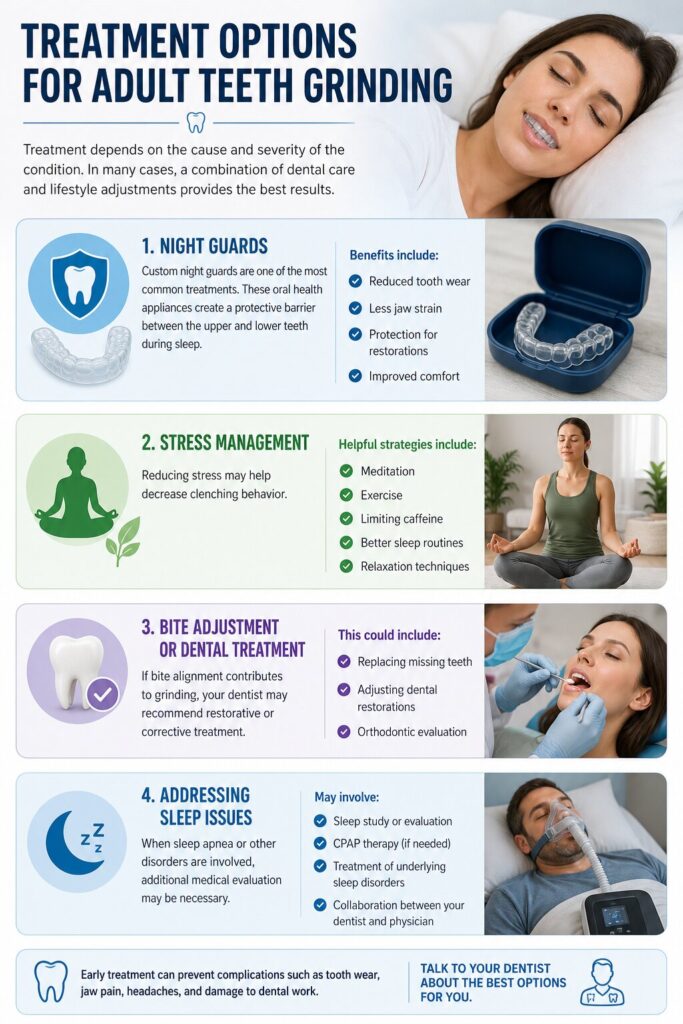
Treatment Options for Adult Teeth Grinding
Treatment depends on the cause and severity of the condition. In many cases, a combination of dental care and lifestyle adjustments provides the best results.
Night Guards
Custom night guards are one of the most common treatments. These oral health appliances create a protective barrier between the upper and lower teeth during sleep.
Benefits include:
- Reduced tooth wear
- Less jaw strain
- Protection for restorations
- Improved comfort
Stress Management
Reducing stress may help decrease clenching behavior.
Helpful strategies include:
- Meditation
- Exercise
- Limiting caffeine
- Better sleep routines
- Relaxation techniques
Bite Adjustment or Dental Treatment
If bite alignment contributes to grinding, your dentist may recommend restorative or corrective treatment.
This could include:
- Replacing missing teeth
- Adjusting dental restorations
- Orthodontic evaluation
Addressing Sleep Issues
When sleep apnea or other disorders are involved, additional medical evaluation may be necessary.
Treating the underlying sleep condition often improves grinding symptoms.
When Should You See a Dentist?
It is important to schedule an evaluation if you experience:
- Persistent jaw pain
- Frequent headaches
- Sensitive teeth
- Broken dental work
- Teeth that appear shorter or worn down
Early diagnosis may prevent more expensive and complex dental problems later.
At TriDental Waldorf in Waldorf, MD 20601, patients receive personalized evaluations to determine the underlying cause of teeth grinding and appropriate treatment options.
Schedule your appointment today to protect your smile and improve your comfort before symptoms worsen.
Common Questions Patients Ask About Teeth Grinding
Can adults suddenly start grinding their teeth?
Yes. Stress, sleep problems, medications, and bite changes can all trigger teeth grinding later in life.
Is teeth grinding always related to stress?
Not always. While stress is a common cause, sleep disorders, dental alignment issues, and certain medications may also contribute.
Can teeth grinding damage crowns or fillings?
Yes. Grinding places pressure on dental restorations and may cause cracks, loosening, or fractures over time.
How do I know if I grind my teeth at night?
Many people are unaware until symptoms appear. Jaw pain, headaches, worn teeth, or comments from a sleep partner are common clues.
Will a night guard stop teeth grinding completely?
A night guard protects the teeth and reduces pressure, but additional treatment may still be needed to address the root cause.
Conclusion
Teeth grinding can begin at any age, and many adults are surprised when symptoms suddenly appear later in life. Stress, sleep disorders, medications, and bite changes are all common contributing factors. Ignoring the symptoms may lead to serious dental damage, jaw discomfort, and long-term oral health complications.
Working with a trusted Waldorf Dentist can help identify the cause early and create a treatment plan tailored to your needs. Whether you are experiencing jaw pain, worn teeth, or morning headaches, professional evaluation can make a significant difference.
TriDental Waldorf proudly serves patients in Waldorf, MD 20601 with compassionate and comprehensive dental care. Schedule your appointment today to learn more about protecting your smile from the effects of teeth grinding.